
A week ago, my brother-in-law called me to help him get a better school for his son. This is after the new system slotted the young man in a ‘low-rank’ high school. He wanted me to make some calls so that the boy can go to THE Alliance High School, my alma mater. I was lucky to join Bush in 1995, thanks to being the son of a teacher, and my father being someone who understood the (quota) system then.
I remember being sent to a boarding school to repeat standard 7 in Makuyu back in 1993, near Ithanga, where we killed snakes every day. But my dad knew that in Nyeri district, my chances were only Nyeri High School at best, but he wanted me in a national school (I was always number 1-2-3 in my village school).
Alliance totally changed the tangent of my life, and aided my art ambitions. Of course we had a dedicated art teacher, availability of materials, not forgetting being the only art student in both form 3 (1997) and form 4 (1998). I remember sitting alone in the school hall to take the KCSE theory paper. I also remember getting a whole loaf of bread for breakfast, because we were a handful of students left in school in the last week of exams.
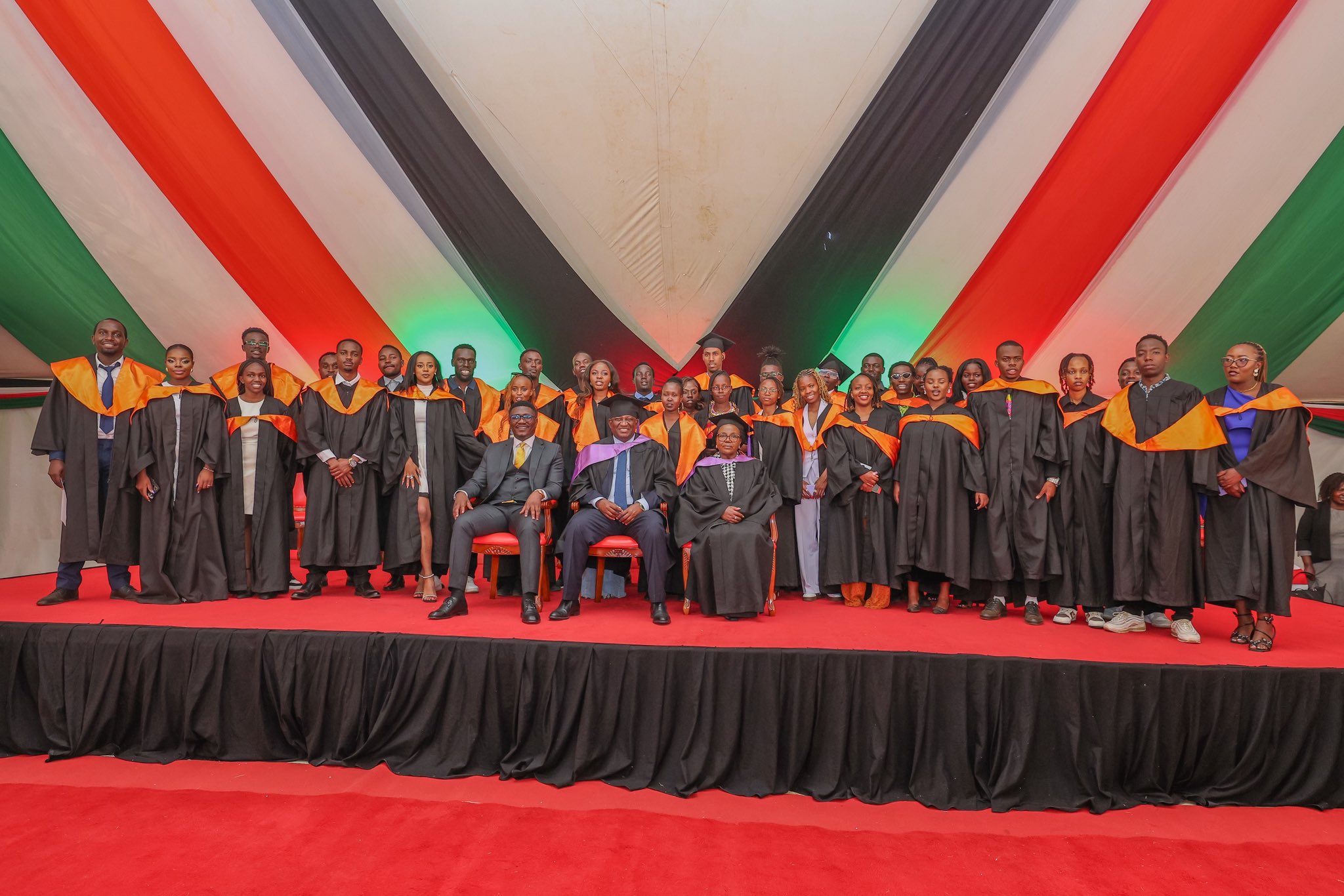
Fast forward 27 years later, this thing called CBC/CBE has brought big changes to education, but the shift to senior school is causing a lot of mathogothanio. As we head into 2026, over 100,000 Grade 10 learners have already applied for reviews of their school placements, showing widespread dissatisfaction. This selection process for Grade 10 involves an assessment that looks at things like performance, interests, and available spots in schools.
Enter what our government does best, confusion. Parents and students are upset because many end up in schools or pathways that don’t match their choices, leading to a chaotic seven-day window for changes. Some even call for scrapping CBC and going back to the old 8-4-4 system, arguing it’s too messy and unprepared.
This chaos sets a tough stage for kids dreaming of creative careers, making the system feel unfair from the start. In the new CBC system, art and creative career pathways are meant to be “discovered” through a mix of assessments and guidance in earlier grades. By Grade 9, students pick from three main pathways: STEM, Social Sciences, or Arts and Sports Science. I will reserve my comments on how they still lump art and sports everywhere, including ministries and state offices!
The Arts and Sports pathway has tracks like Performing Arts (music, dance, theater) and Visual Arts (drawing, design), where talents are spotted via practical activities and teacher observations. This is where the rain really starts beating us. We must not forget that as artists, sisi ni walala hoi tu.

On the positive side, this set-up lets learners explore their passions early, unlike our old 8:4:4 system that pushed everyone toward exams. CBC promises to nurture creativity with hands-on learning (remember the expensive CBC homeworks?), which could help budding artists build skills for real-world jobs.
But kwa ground, things are different, discovery often feels rushed; many schools lack the tools or trained teachers to properly identify creative talents, so choices depend more on luck or basic tests than true authentic exploration. Prof. Wandia Njoya, a literary creative academician herself, has ranted, spoken and written about this extensively.
For decades, we artists and creatives in Kenya have suffered from neglect, turning our career paths into a real career tragedy. Government policies, including our own KK Govrnment, have long ignored the arts, with tiny budgets for creative programs compared to STEM fields. Did you know that Kalasha Awards could not happen in 2025 because of budget cuts? This current government has had the most promises on Arts, but tuko tu pale pale.

Many schools often have no art rooms, art supplies, or even basic facilities like studios, forcing kids to improvise or give up. I remember a fundraiser and volunteers’ call to equip a photo studio at Alliance High School a few years ago. Now imagine other lower ranking schools?
In the Culture and Creative Industries, things are worse; low pay, piracy, and weak laws and policies mean many talented people struggle to make a living. The education system treats arts as a “lesser” option, pushing bright students away and leaving creatives without support networks or fair opportunities. Even with CBC’s good intentions, this history of shortchanging artists-in funding, in facilities, and respect-means creative pathways are still unequal and undervalued.
All in all, we have a few who succeed through sheer grit, but most get stuck in a cycle of kusota and frustration. But to fix this, we do not need to pray and fast or consult our ancestors. Solutions are right here with us. First, the government should boost funding for arts in schools; allocate more money for supplies, studios, and teacher training right away.
Second, integrate career guidance programs in early grades, with mentors from the creative industry and associations to help spot and nurture talents properly. Third, reform policies to protect artists, like stronger anti-piracy laws and grants for young creatives to build sustainable and thriving careers.
Finally, partner schools with local artists and companies for real-world projects, turning classrooms into launchpads for creative jobs. Music and Film festivals have that potential, but the Government is not the best channel for that, unfortunately. These steps are doable and could mean a turnaround and growth for Kenya’s next generation of artists.
**Meanwhile, I am waiting for the next “Cultural Festival” with zero culture BUT drowning in politics from first to last day.
 Usanifu News (Kenya)