
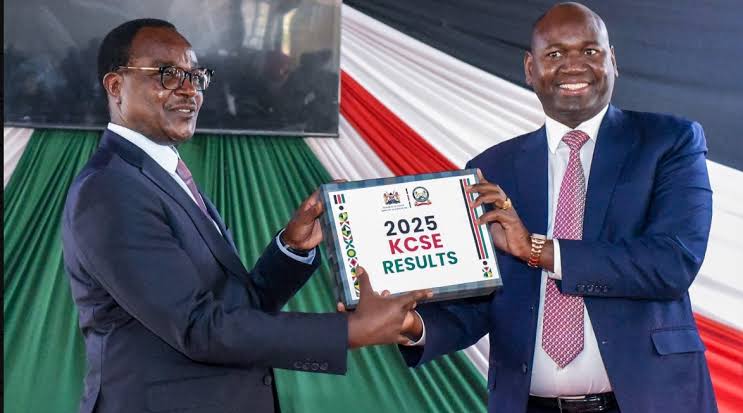
As we start to post our children’s results on Facebook (the dinosaurs are still there) and carry twigs in happy maandamano-like dances and celebrations for ‘excellent performance’, there’s a palpable sense of progress in our ever-changing education sector. Announced by CS Julius Ogamba, these national exam results reflect the efforts of a million candidates who sat for the exams last year.
Notably, over 270,000 students achieved a C+ and above, qualifying for direct university entry. This is a marked improvement from 25 per cent last year. Not forgetting close to 2,000 straight A’s, which signals enhanced overall performance across 17 subjects. What does this mean for the artistically talented or creatively skilled candidates?
First of all, these outcomes arrive amid the ongoing transition to the CBE/CBC system, which is reshaping secondary education to better nurture diverse talents. For artistic and creative students, particularly those in the public schools you are now fighting over is a delicate mix of propped futures but still a push against the grain. As they navigate this new system, the results offer a timely lens to examine how well we’re preparing the next generation of innovators in arts, music, design, and performing arts. The CBC, fully rolled out since 2017, represents a forward-thinking shift from the rigid 8-4-4 system that many of us are products of, toward a more holistic, skills-oriented approach.

Let me remind you that in senior secondary school (Grades 10-12), students now choose from three pathways: STEM (projected for 60% of learners), Social Sciences (25%), and Arts and Sports Science (15%). This structure is particularly promising for creatively inclined youth, as the Arts and Sports pathway integrates visual arts, performing arts (including music, dance, and theatre), design, and sports science. Once again, I am still consulting the gods as to why sports and art is put together, yet they have very stark differences.
Unlike the old curriculum’s one-size-fits-all emphasis on ‘mechanical’ learning, CBC/CBE encourages experiential learning, collaboration, and real-world application. These are the core elements that align with artistic processes. For instance, students can now develop portfolios at a very early age, showcasing their creative projects, fostering skills like critical thinking and innovation that are essential in Kenya’s fast-growing creative economy.

However, this comes after a painful history: the scrapping of Art and Craft as an examinable subject in primary schools around a decade ago under the 8-4-4 system stifled early creative development. And that gap will, or is already catching up with us in the industry. That decision marginalized arts education, leaving many public school students without foundational exposure and reinforcing a narrative that creativity was secondary to academic pursuits.
Globally, education systems that prioritize STEM and sciences at the expense of the arts risk creating imbalances, and we are no exception. The uniform grading model which treats all students as if they thrive under the same metrics, often disadvantages artistic minds, who excel in divergent thinking, emotional intelligence, and non-linear problem-solving rather than standardized exams like KCSE.

In public schools, where resources are stretched thin, this STEM-centric focus can bring about inequalities, pushing creative students toward paths that don’t suit their strengths and leading to higher dropout rates or under-performance. Yet, as someone deeply embedded in Kenya’s creative industry, I’ve seen firsthand how this oversight diminishes our national creativity pipeline. Artists and designers aren’t just extras; they drive cultural exports, tourism, and even tech integrations like digital animation.
This is where the concept of STEAM; integrating Arts into STEM, offers a practical and all-rounded solution. By blending artistic creativity with scientific brilliance, STEAM cultivates well-rounded thinkers who can innovate across disciplines. In Kenya, adopting STEAM could amplify our global competitiveness; for example, music and design students could collaborate on sustainable tech solutions, like eco-friendly fashion or digital media platforms that preserve indigenous stories. Research shows STEAM-educated individuals are 15-20% more likely to pursue entrepreneurial ventures, which aligns perfectly with Kenya’s Vision 2030 goals for a knowledge-based economy.

For artistic students in the CBE framework, this means greater opportunities to have more money in their pockets. Even turning passions into viable careers in film, fine art, dance, content creation or performing arts industries that are projected to grow by 10% annually in East Africa. Looking deeper, the 2025 KCSE results highlight a critical juncture for schools (especially public ones) under CBC.
While private institutions often have better access to arts facilities like art and design studios, music instruments or good art teachers, public schools must bridge this gap through targeted investments. Initiatives like government-funded talent academies or partnerships with creative hubs, Professional Associations and County Governments could provide low-cost resources, ensuring equitable preparation.
From where I stand, including my own personal experience, I’ve observed that students exposed to integrated arts programs show improved resilience and adaptability. Or do I call it a broader perspective? These are key traits for navigating Kenya’s fluid and highly competitive job market. Let’s not forget that embracing CBC’s flexibility could position Kenya as a regional leader in the creative economy.

Adding to that, we need to continue prioritizing mentorship programs that connect high school and college creatives with industry professionals. We need to accelerate this transformation, guaranteeing more successful careers and greater impact in the entire culture and creative economy.
As I pen this article, watching 9:00pm news on Citizen in ushago, I am still waiting to hear an A student say they want to be a Tiktoker, or an actor, or a fashion designer, or a special effects make-up artist, or a theatre practitioner. Anyways, I hope and pray that we invest more in STEAM frameworks, advocate for resource equity in public schools, and increasingly celebrate artistic talents as national assets and pride. We all collaborate, not to dwell on past shortcomings but to build a vibrant, solution-driven future where every KCSE student, creative or otherwise, thrives.
**As we discuss ownership of national schools in murima and elsewhere, it was at Alliance High School that I first met someone from Mt Elgon (Sabaot), Lamu, Kilifi, Lodwar, Wajir & Mandera >> the list is long. And my tribal “walls of Jericho” came a’tumblin down. I remember my mother being apprehensive about my mkamba best friend from Makueni, called Michael Mutula Mwema.
 Usanifu News (Kenya)